
Lis Pendens: What It Means in Foreclosure
What a lis pendens is: a recorded notice that a lawsuit affecting a property's title is pending, how it differs from a notice of default, and how investors read it.
What a lis pendens is
A lis pendens — Latin for “suit pending” — is a notice recorded in a real property’s chain of title to alert third parties that a lawsuit affecting that title is in progress. The Cornell Legal Information Institute describes it as notice that “any interests acquired during the pendency of the suit are subject to its outcome” (accessed July 2026). In plain terms: the fight over the property is on the public record, and anyone who buys in during the fight inherits the result.
It is recorded with the same county office that holds deeds and mortgages — the recorder or clerk — so it becomes part of the permanent title history.
Lis pendens vs notice of default
The two documents get confused because both show up around foreclosure, but they mark different processes.
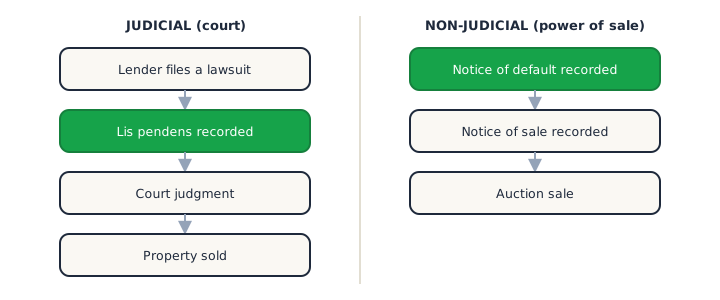
- Lis pendens means a lawsuit has been filed. This is the hallmark of judicial foreclosure, where a lender must sue to foreclose.
- Notice of default means the lender recorded a default under a deed of trust to begin a non-judicial (power-of-sale) foreclosure — no lawsuit required. California’s process, for example, runs off a recorded notice of default under Civil Code section 2924 (accessed July 2026).
Which one you see depends on the state and whether the foreclosure runs through a court. Some title disputes unrelated to mortgages (divorce, partition, contract claims) also produce a lis pendens.
What it signals to an investor
A lis pendens is a public, dated distress signal. The recording date is the true age of the lead — not when a data vendor happened to surface it. It tells you the owner is entangled in litigation over the property, which often (though not always) means financial pressure and a reason to sell before the case forces the outcome.
It is also a caution flag: contested title is a risk, not a clean deal. Treat a lis pendens as a reason to investigate, verify against the court docket, and get title and legal review — consistent with our methodology of checking every record against its primary source.
How to read the record
A lis pendens filing names the parties and references a court case. To work it: note the recording date, pull the referenced case from the court’s docket to see what is actually being litigated, and confirm the owner and parcel against the assessor’s record. This is the same public-records path we walk through in where pre-foreclosure data comes from, and it sits early in the broader pre-foreclosure timeline.
If you would rather not pull filings county by county, tools like DealMachine aggregate these records for a fee — see our DealMachine review. It is the same public data, packaged for speed.
Sources
- Cornell Legal Information Institute — Lis Pendens (definition; accessed July 2026)
- California Civil Code section 2924 (FindLaw) (non-judicial notice of default; accessed July 2026)
Frequently asked questions
- What does lis pendens mean?
- Lis pendens is Latin for suit pending. It is a notice recorded in a property's chain of title telling the public that a lawsuit affecting the title to that property is in progress, so anyone acquiring an interest takes it subject to the outcome of the case (Cornell Legal Information Institute).
- Is a lis pendens the same as foreclosure?
- No. A lis pendens is notice that a lawsuit is pending, not the foreclosure itself. In states that foreclose through the courts (judicial foreclosure), a lis pendens is filed when the lender sues. The actual sale, if any, comes later, after judgment.
- Can you buy a house with a lis pendens on it?
- You can, but you take the property subject to the pending lawsuit. Any interest acquired while the suit is pending can be affected by the final judgment, so the claim does not simply disappear at closing. Title review and legal advice are essential before proceeding.
- How is a lis pendens different from a notice of default?
- A lis pendens signals a lawsuit (typical of judicial foreclosure). A notice of default is recorded by the lender to start a non-judicial, power-of-sale foreclosure with no lawsuit. Which one appears depends on the state and the type of foreclosure.
- How long does a lis pendens stay on a property?
- It generally remains until the underlying case is resolved, dismissed, or the notice is expunged or cancelled through the court. There is no single national duration; it tracks the life of the lawsuit and varies by state.
How this page was researched and verified: read the methodology. Found something out of date? Tell us.
Get the REI software pricing tracker
A dated log of what these tools actually cost, updated as prices change. No spam, unsubscribe anytime.
Double opt-in. We never sell the list. See our privacy policy.