
Real Estate Wholesaling for Beginners
What real estate wholesaling actually is, how the assignment fee works, whether it is legal in your state (with the statutes), and why most beginners quit.
Real estate wholesaling means putting a property under contract with a motivated seller, then assigning that contract to an end buyer for a fee — you sell the contract, not the house, and you never take title. The fee is the spread between your contract price and what the end buyer pays. It is legal in most states, but several regulate it directly, and two changed their rules in 2025. Read the legal section before you do anything else.
What wholesaling actually is
You are not buying property. You are acquiring an equitable interest — a contractual right to buy — and then selling that right to somebody who does want to own the house.
The mechanics are simple enough to fit in a paragraph. You find an owner with a reason to sell. You agree a price low enough that an investor can still profit after repairs. You sign a purchase and sale agreement that permits assignment. Before closing, you assign the contract to a cash buyer for more than your contract price. The difference is your assignment fee, paid at closing.
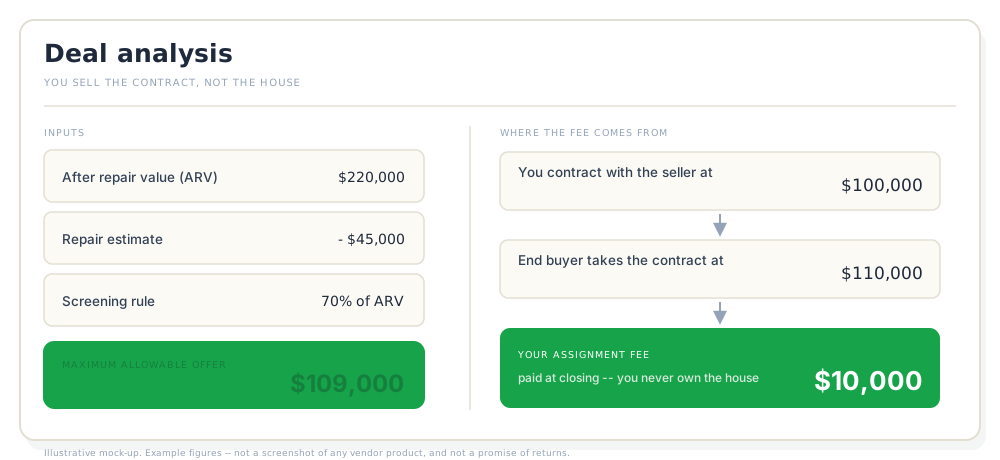
Where the money comes from — and why the published numbers are unreliable
The fee is the spread. That is the whole business model.
Now the part the guides skip. Search for what wholesalers earn and you will find confident figures: an average assignment fee of roughly $13,000, typical ranges of $5,000 to $20,000. Follow those numbers to their source and they lead to self-selected industry surveys, not transaction records. Nobody is auditing county deed data to produce them. People who had a good year answer the survey; people who quit after eight months do not.
Treat every published wholesaling income figure as directional at best. The honest statement is this: the fee is whatever spread you can create and defend, it is earned only when the deal closes, and the deals that close are a small fraction of the leads you start with.
Is wholesaling legal?
Generally yes — assigning a contract is ordinary contract law. But “generally legal” is doing a lot of work in that sentence, because several states regulate wholesaling specifically, and the rules tightened in 2025. Here are three we verified at the statute.
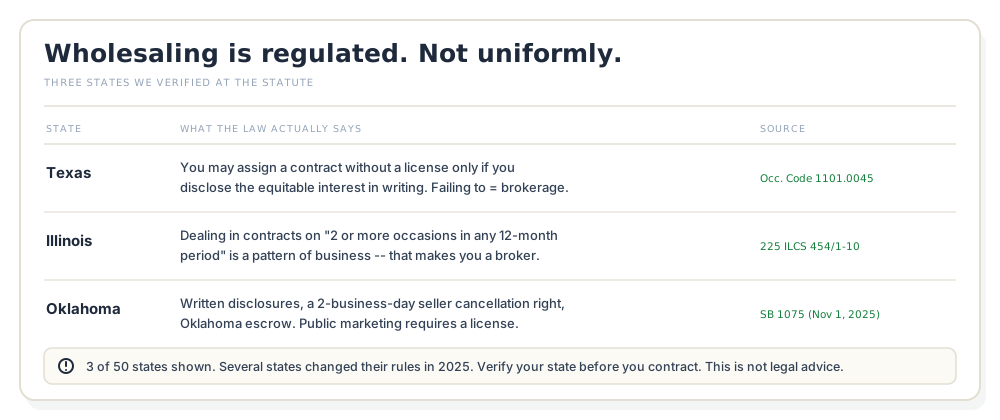
Texas — disclose, or you are brokering. Under Occupations Code section 1101.0045, you may sell an option or assign a contract without a license only if you “do not use the option or contract to purchase to engage in real estate brokerage” and you “disclose in writing the nature of the equitable interest to any seller or potential buyer.” Subsection (b) is blunt: assigning without that disclosure is engaging in real estate brokerage. Enacted 2017; amended effective January 1, 2024.
Illinois — the second deal makes you a broker. Illinois defines a broker to include a person who “engages in a pattern of business of buying, selling, offering to buy or sell, marketing for sale, exchanging, or otherwise dealing in contracts,” and defines that pattern as having “engaged in one or more of these practices on 2 or more occasions in any 12-month period” (225 ILCS 454/1-10). Read plainly: your second contract assignment inside twelve months puts you inside the broker definition, and brokers need a license.
Oklahoma — disclosures, a cancellation right, and no public marketing. Senate Bill 1075 took effect November 1, 2025. As summarized by Avenue Legal Group reading the enrolled bill, a residential wholesaler must disclose in writing the intent to assign at a higher price, recommend the homeowner seek legal counsel, and disclose a two-business-day cancellation right; earnest money must sit in an Oklahoma escrow account at a federally insured institution; if the disclosures are missing the contract is invalid and unenforceable by the wholesaler; and publicly marketing the equitable interest requires a real estate license.
Three states out of fifty. Several others changed rules in the same period. Verify your own state before you sign anything, and get a local attorney. Nothing here is legal advice.
What actually kills beginners
Not the law. Arithmetic.
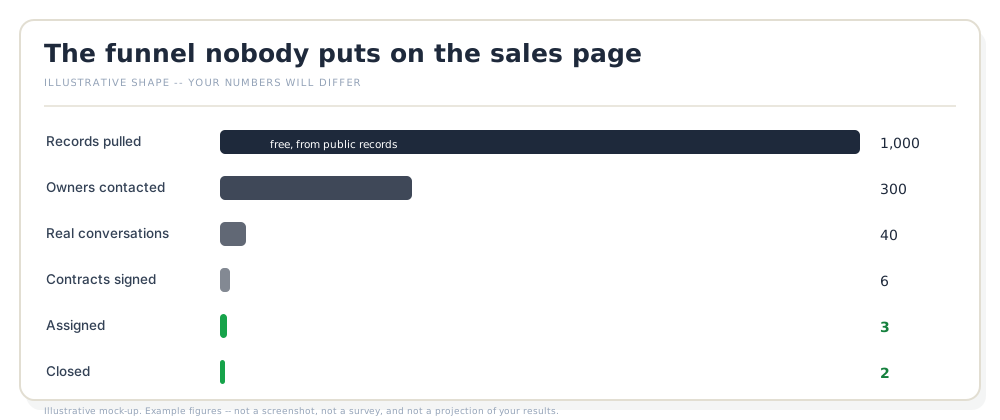
The funnel is brutal and it is front-loaded. Pulling a thousand records from the county is free and takes an afternoon. Getting six signed contracts out of them takes months of contact, rejection, and follow-up. Then:
- No cash buyer. A contract you cannot assign is a contract you have to close on, or breach. Build the cash-buyer list before you need it.
- Bad repair numbers. Your end buyer will re-underwrite your estimate. If your ARV was optimistic or your repair budget was fiction, the deal dies and your reputation with it.
- Earnest money at risk. It is a real deposit on a real contract.
- The spread was never there. Some houses are cheap because they are worth it.
Who it suits
Wholesaling rewards people who will do unglamorous, repetitive sourcing work for months before the first payday, and who are comfortable having difficult conversations with owners in difficult situations. It punishes people who wanted passive income. It is a sales-and-sourcing job with a real estate hat on.
It is also a legitimate on-ramp: it teaches deal analysis and seller conversations without requiring capital. Just do not confuse “no capital” with “no cost.” The cost is time.
Where to start
Start with the leads, because everything downstream is a consequence of the leads. Our pillar on how to find off-market properties walks the free public-record methods — pre-foreclosure, absentee owners, probate, tax-delinquent, vacancy — and the glossary defines every term above in a sentence.
When you want the operational sequence rather than the concepts, read how to wholesale real estate step by step. Everything we publish is verified at the primary source, per our methodology.
Sources
- Texas Occupations Code section 1101.0045 (equitable-interest disclosure; enacted 2017, amended eff. Jan 1, 2024; accessed July 2026)
- 225 ILCS 454/1-10, Illinois Real Estate License Act of 2000 (FindLaw) (“pattern of business”, 2-or-more occasions in 12 months; accessed July 2026)
- Oklahoma SB 1075, enrolled bill and Avenue Legal Group’s analysis (disclosures, 2-business-day cancellation, escrow, public-marketing license; effective Nov 1, 2025; accessed July 2026)